

The UK’s nuclear sector is entering a new phase of growth. Alongside major projects such as Sizewell C, the planned deployment of Small Modular Reactors (SMRs) is expected to support Net Zero ambitions by providing reliable, low-carbon power alongside other clean energy technologies.
For the nuclear supply chain, this growth brings both opportunity and increased responsibility. SMRs are designed around standardisation, factory manufacture, and repeatable assembly, helping to improve consistency and reduce on-site complexity. And this approach makes material assurance more critical than ever.
Navigating compliance begins long before fabrication. It starts with selecting the correct material, verifying its provenance, and maintaining its properties through processing, testing, and delivery.
In nuclear environments, “standard” material is not enough. Safety-critical applications require steel supplied to defined technical specifications, supported by auditable certification and robust quality systems that preserve material identity from the mill to the point of installation.
What Makes Steel Suitable for Nuclear Applications?
Nuclear-grade steel is a specially manufactured steel designed for use in demanding nuclear applications, including defence applications and nuclear power stations. It meets strict standards for strength, corrosion resistance, radiation tolerance, and quality control, ensuring long-term safety and reliability in nuclear environments.
Depending on the application, nuclear-grade materials may require tightly controlled chemical composition, limits on specific elements such as cobalt, and verified mechanical performance including strength, fracture toughness, and impact resistance at defined temperatures. These requirements ensure the material can perform reliably under the operating conditions expected throughout its service life.
However, material properties alone are not the only requirement. Nuclear projects depend on complete traceability, linking each component back to its original heat, plate, certification, inspection, and processing records. This provides the evidence needed to demonstrate that the installed material is the material specified in the engineering design.
What steel is used in nuclear reactors?
There is no single type of steel used across a nuclear facility. Material selection depends on the component’s function, the operating environment, and the performance requirements specified in the design specification.
High-strength low-alloy (HSLA) steels are used where a combination of strength, toughness, and weldability is required. These materials can support demanding structural applications where load-bearing capability and resistance to failure are critical. Their performance is determined not only by strength but also by factors such as impact toughness, fabrication requirements, and long-term service conditions.
Austenitic stainless steels, including grades such as 304L and 316L, are widely used where corrosion resistance, durability, and fabrication performance are important. Their low-carbon composition helps reduce the risk of sensitisation during welding and supports long-term resistance to intergranular corrosion. Depending on the application, these materials may be used for pipework, tanks, liners, supports, and process equipment.
Heavy carbon steel plate is also used in nuclear infrastructure where structural strength, containment, or shielding performance is required. In these applications, thick plate sections may be used in containment systems, protective structures, and radiation shielding assemblies. The required properties depend on the engineering design, including thickness, structural loading, and shielding calculations.
For nuclear projects, choosing the right steel is not simply a matter of selecting the strongest material available. Engineers must consider the complete service environment, including temperature, corrosion exposure, and radiation conditions, as well as the ability to maintain full material traceability and compliance throughout fabrication and installation.
EN 1090 EXC4: The Highest Level of Compliance
What are the EN 1090 EXC4 requirements for nuclear fabrication?
EN 1090-2 EXC4 is the highest execution class for structural steelwork and is reserved for structures where failure would have catastrophic consequences. It represents the most demanding level of control within the EN 1090 framework, requiring rigorous management of materials, fabrication processes, inspection, and documentation.
For nuclear fabrication, EXC4 provides a structured approach to ensuring that safety-critical steelwork is produced consistently and can be fully verified throughout the manufacturing process. However, it should be considered alongside the project specification, design requirements, and any additional nuclear quality controls defined by the responsible engineering authority.
For suppliers working on high-consequence infrastructure, compliance is demonstrated through evidence: controlled processes, qualified personnel, inspection records, and complete traceability from material receipt through to finished component delivery.
Checklist for EXC4 compliance
A robust EXC4 fabrication process should include:
Material certification and traceability
Steel must be supplied with the appropriate inspection documentation, typically EN 10204 Type 3.1 certification, with Type 3.2 certification required where independent verification is specified by the contract or project requirements. Material identity must be maintained through heat numbers, certificates, processing records, and final component documentation.
Qualified welding procedures and personnel
Welding activities must be carried out using approved procedures by qualified welders. Personnel qualifications should align with the applicable requirements, including BS EN ISO 9606-1 for welder qualification where relevant.
Comprehensive inspection and non-destructive testing (NDT)
Inspection requirements must be defined in the project specification and may include visual, ultrasonic, magnetic particle, and radiographic testing. The extent of NDT depends on factors such as material type, thickness, joint category, execution class, and safety requirements.
For nuclear and other high-consequence applications, EXC4 compliance is ultimately about demonstrating control. The ability to provide complete records, verified processes, and traceable material history is what gives engineering teams confidence in the finished structure.
Material Integrity: Radiation & Traceability
Can nuclear radiation pass through steel?
Yes. Some forms of ionising radiation, particularly gamma rays, can penetrate steel. However, steel plays an important role in radiation shielding by significantly reducing radiation intensity when the correct grade and thickness are specified as part of an engineered shielding system.
Heavy-gauge steel plate is widely used in containment structures, transport casks, storage systems, and protective barriers, where it contributes both structural strength and radiation attenuation. The required shielding performance depends on factors including the radiation type, energy level, material density, and plate thickness, and must always be determined through engineering calculations rather than assumed from the material alone.
What are the requirements for nuclear-grade materials?
Nuclear-grade materials must meet stringent requirements to ensure reliable performance throughout a component’s operational life. Unlike conventional structural applications, nuclear materials are selected not only for their immediate mechanical properties, but also for their ability to withstand long-term exposure to challenging operating conditions.
A key requirement is strict control of material chemistry. Impurities such as sulphur and phosphorus are carefully managed because elevated levels can reduce toughness, affect weldability, and influence long-term material performance. Depending on the application, other residual elements may also require control to meet specific project requirements.
Nuclear materials must also demonstrate resistance to degradation mechanisms that may occur over decades of service. These can include thermal ageing, fatigue, corrosion, and radiation-induced changes, such as embrittlement, in which exposure to neutron radiation can reduce a material’s toughness over time.
To manage these risks, nuclear specifications may require detailed mechanical testing, controlled manufacturing processes, and comprehensive certification to verify that the material meets the required performance criteria.
For engineers and QA teams, the objective is not simply to select a steel with the required strength at the point of manufacture. It is to ensure the material remains predictable, traceable, and fit for purpose throughout its intended service life.
This combination of controlled chemistry, verified properties, and complete documentation is what provides confidence in nuclear-grade material performance.
The Brown McFarlane advantage: Traceability as standard
Brown McFarlane’s commitment to total traceability ensures every plate can be linked back to its original certification, verifying its chemical composition, mechanical properties, and processing history.
We supply a wide range of nuclear-grade steel plate, including durable, corrosion-resistant stainless steel plate and carbon grades designed for structural and pressure-containing components.
Beyond supply, our team offers specialist processing capabilities that help customers maintain material integrity and traceability from the steel mill through the engineering process to delivery of the final product.
Brown McFarlane’s precision engineering and machine shop capabilities produce accurately machined components to meet demanding project requirements, while maintaining clear links between material certification and finished components.
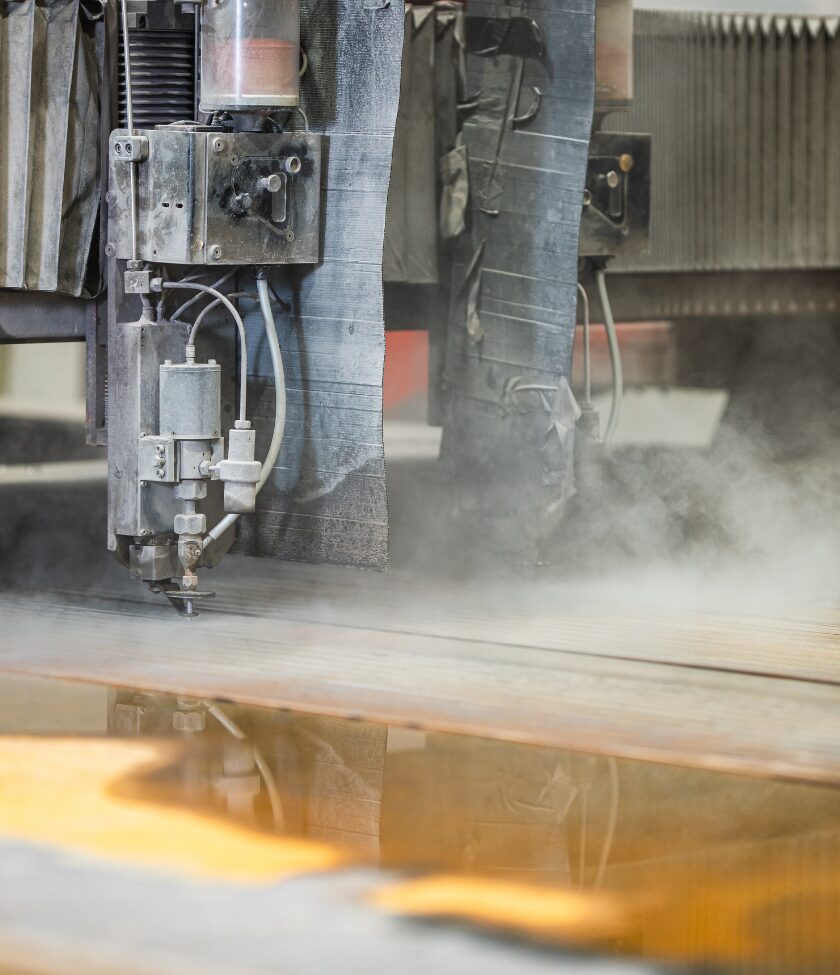
For applications where preserving material integrity is critical, our water-jet cutting service offers a cold-cutting option that avoids the heat-affected zone of thermal cutting processes, helping maintain material properties at the cut edge.
With our extensive experience in the defence and nuclear sectors, this integrated approach to SMR programmes and major nuclear infrastructure projects supports repeatable delivery at scale: the right material, processed to the right specification, with the evidence required to prove conformity.
Choosing a compliant nuclear steel supply partner
In nuclear and other high-consequence industries, confidence comes from more than supplying the correct steel grade. It comes from maintaining control of the material throughout its journey, from certification and storage through to processing and delivery.
That is why EXC4 structural work and nuclear-grade materials require more than a conventional steel stockholder. They require a supply partner that understands high-consequence specifications, certificate control, traceability, special-process risks and the scrutiny applied to nuclear documentation.
Brown McFarlane’s commitment to quality is verified by the highest industry standards, ensuring we meet the stringent demands of the nuclear sector.
Contact our Nuclear steel experts to discuss your next safety-critical project.